Quick answer
Your paycheck can differ from your hours worked because of pay period dates, unpaid breaks, net pay deductions, overtime rules, differentials, PTO or sick time, manual adjustments, and pending timecard edits. Sort the difference layer by layer.
A difference is not always a disaster. It is a signal.
When your paycheck and your memory do not line up, the goal is to find the missing context. Sometimes the paycheck is wrong. Sometimes the pay period cut off earlier than expected. Sometimes a break, differential, or deduction changed the number.
Start by asking:
- Am I comparing gross pay or net pay?
- Do my records match the exact pay period?
- Were unpaid breaks entered correctly?
- Did overtime land in the correct workweek?
- Were night, weekend, holiday, or role differentials included?
- Are any edits or approvals still pending?
Common reasons your paycheck may be different
1. The pay period cutoff is different from your mental calendar
Your bank deposit may arrive after a pay period closes. A shift you expected to see might belong to the next paycheck.
2. Net pay includes deductions
Taxes, benefits, retirement, garnishments, and other deductions can make your deposit lower even when gross wages are correct.
3. Breaks changed the paid hours
An unpaid break can be legitimate, mistaken, or entered differently than expected. Either way, it is worth checking.
4. Overtime may be calculated by workweek
If you only total the whole pay period, overtime can look different than expected. Workweek boundaries matter.
5. Differentials may be separate line items
Night, weekend, holiday, and charge differentials can be easy to miss if they appear under a label you do not recognize.
6. Timecard edits may still be pending
A manager correction or approval can lag behind the shift itself.
How to sort the difference without spiraling
Do one pass for each layer: dates, hours, breaks, overtime, differentials, adjustments, deductions. That keeps the check from becoming a foggy pile of numbers.
Where ShiftPocket fits
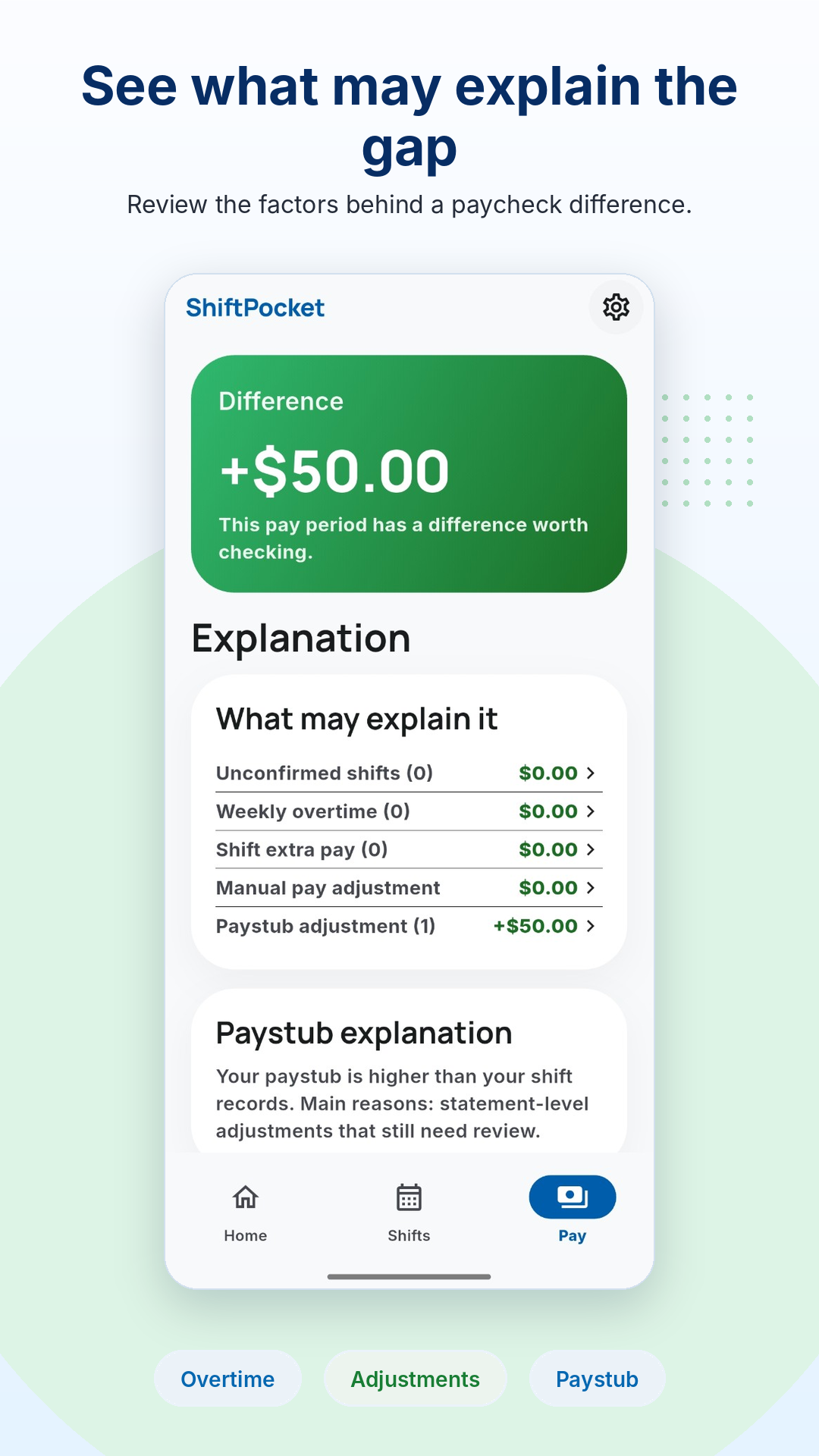
ShiftPocket is designed around that exact gap: the space between a shift you remember and a paycheck you are trying to understand. It keeps planned shifts, actual hours, pay-period summaries, paycheck entries, possible difference sources, and exports in one place.
Try this before next payday
Make the record while the shift is still fresh.
ShiftPocket helps you keep planned shifts, actual hours, breaks, overtime, differentials, and paycheck checks together, so you are not rebuilding your week from memory.
FAQ
Why is my paycheck different from my hours worked?
Common reasons include pay period cutoffs, unpaid breaks, taxes and deductions, overtime rules, shift differentials, PTO or sick time, manual adjustments, and pending timecard edits.
Does a lower bank deposit mean my hours are missing?
Not necessarily. Net pay includes deductions. To check hours, compare gross pay and paystub line items first.
Can overtime make my paycheck look different?
Yes. Overtime may depend on the workweek and the applicable workplace rules, so a pay-period total alone can be misleading.
Can ShiftPocket tell me the legal answer?
No. It helps you organize your personal records and estimates. For official answers, use your pay statement, workplace rules, and qualified advice where needed.