Quick answer
Track overtime by workweek: actual shift times, unpaid breaks, regular hours, overtime hours, and any differential or approval notes. Do not rely only on the total pay-period hours.
Overtime gets messy when you only total the pay period.
If you are paid every two weeks, it is tempting to think “80 hours equals regular, anything over 80 equals overtime.” In many U.S. federal overtime situations, the workweek matters. That means 42 hours in one week and 38 in the next can be different from 40 and 40, even though both total 80.
Track overtime with these pieces:
- Your workweek start day, not only pay period start day.
- Actual hours for each shift.
- Unpaid breaks.
- Regular hours and overtime hours by workweek.
- Any shift differential that may affect the rate.
- Manager approvals or policy notes, if your workplace uses them.
What to track before payday
A useful overtime record is not a motivational spreadsheet. It is a quiet ledger of what happened. Keep dates, actual times, breaks, and notes. If your shift crosses midnight, make sure it lands in the correct workweek according to your workplace rules.
In the U.S., the Department of Labor describes FLSA overtime as hours worked over 40 in a workweek for covered, nonexempt employees. Your local law, job classification, union contract, or workplace policy may add other rules.
Why ShiftPocket focuses on actual shifts
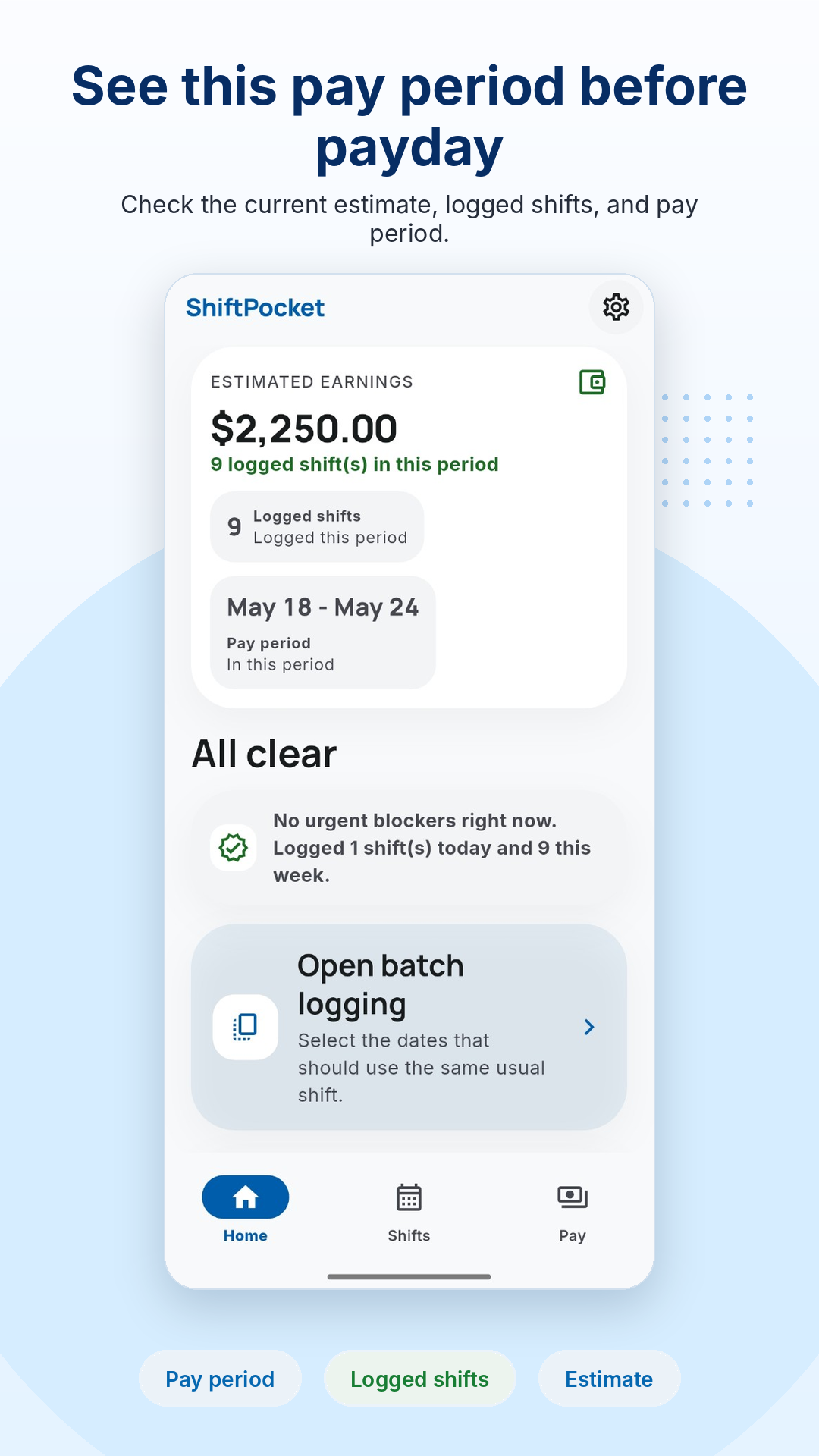
Overtime often disappears in the gap between “I was scheduled” and “I actually worked.” A late handoff, missed break, extra shift, call-in, or end-of-shift report can change the week. ShiftPocket helps you confirm actual shifts as they happen, instead of asking you to rebuild the week on payday.
A simple overtime check
Try this before next payday
Make the record while the shift is still fresh.
ShiftPocket helps you keep planned shifts, actual hours, breaks, overtime, differentials, and paycheck checks together, so you are not rebuilding your week from memory.
FAQ
How should hourly workers track overtime?
Track actual shift times, unpaid breaks, workweek boundaries, regular hours, overtime hours, and any differentials or approvals that may affect the rate.
Is overtime based on the pay period or the workweek?
Under U.S. federal FLSA rules for covered, nonexempt employees, overtime is generally based on hours over 40 in a workweek. Other rules may apply depending on your location and workplace.
Can night shift differential affect overtime?
It can, depending on workplace rules and applicable law. Track the differential and the hours clearly so you can compare your paystub.
Can ShiftPocket replace payroll software?
No. ShiftPocket is a personal record and paycheck-checking tool. Use it to organize your information, then compare with official payroll records.